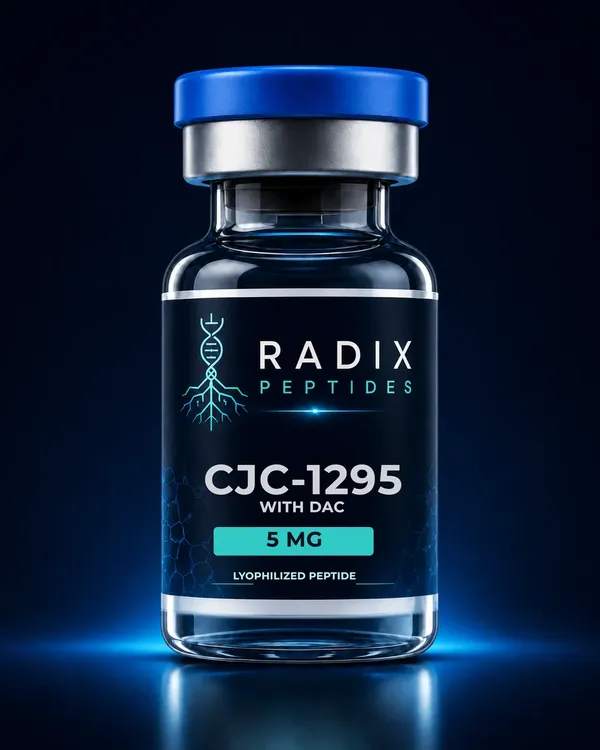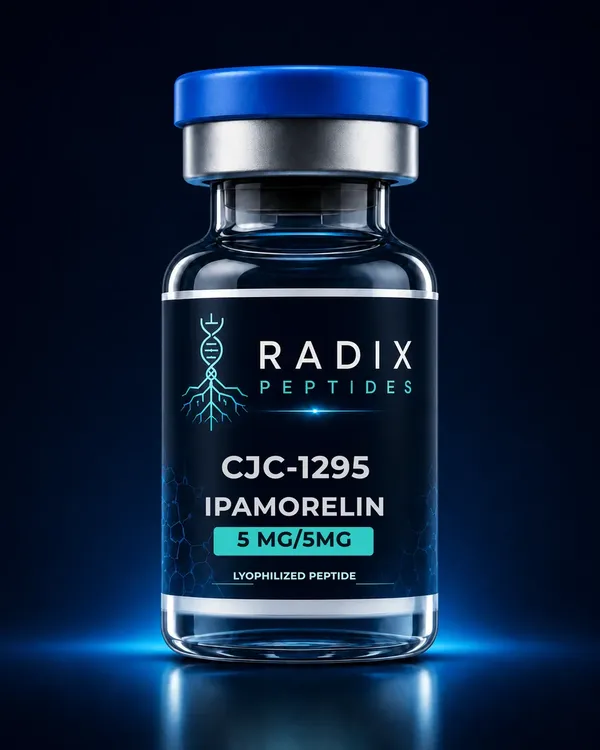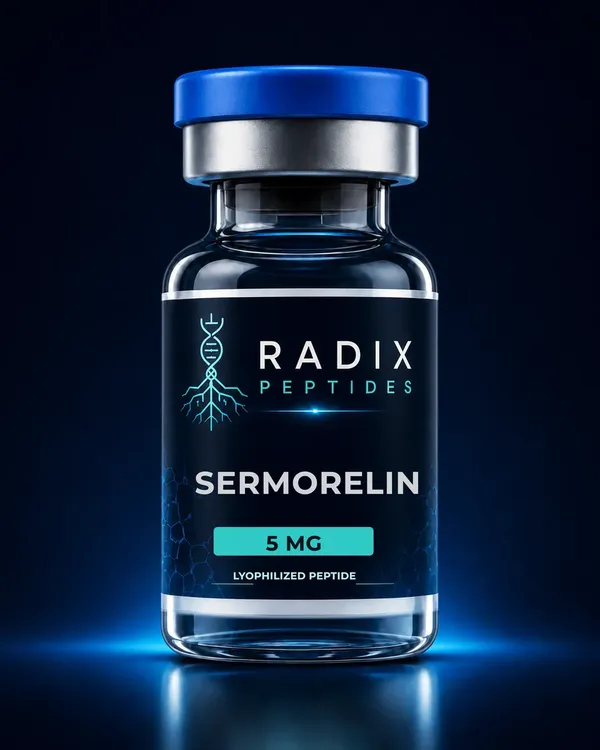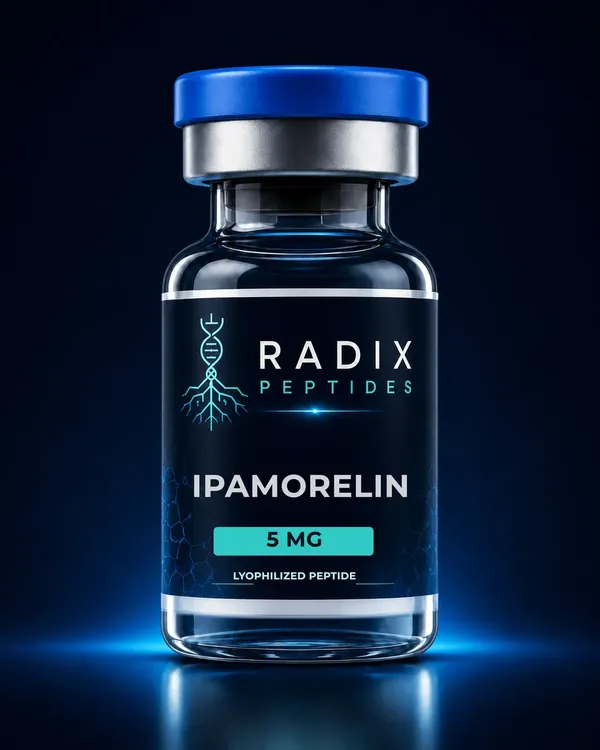
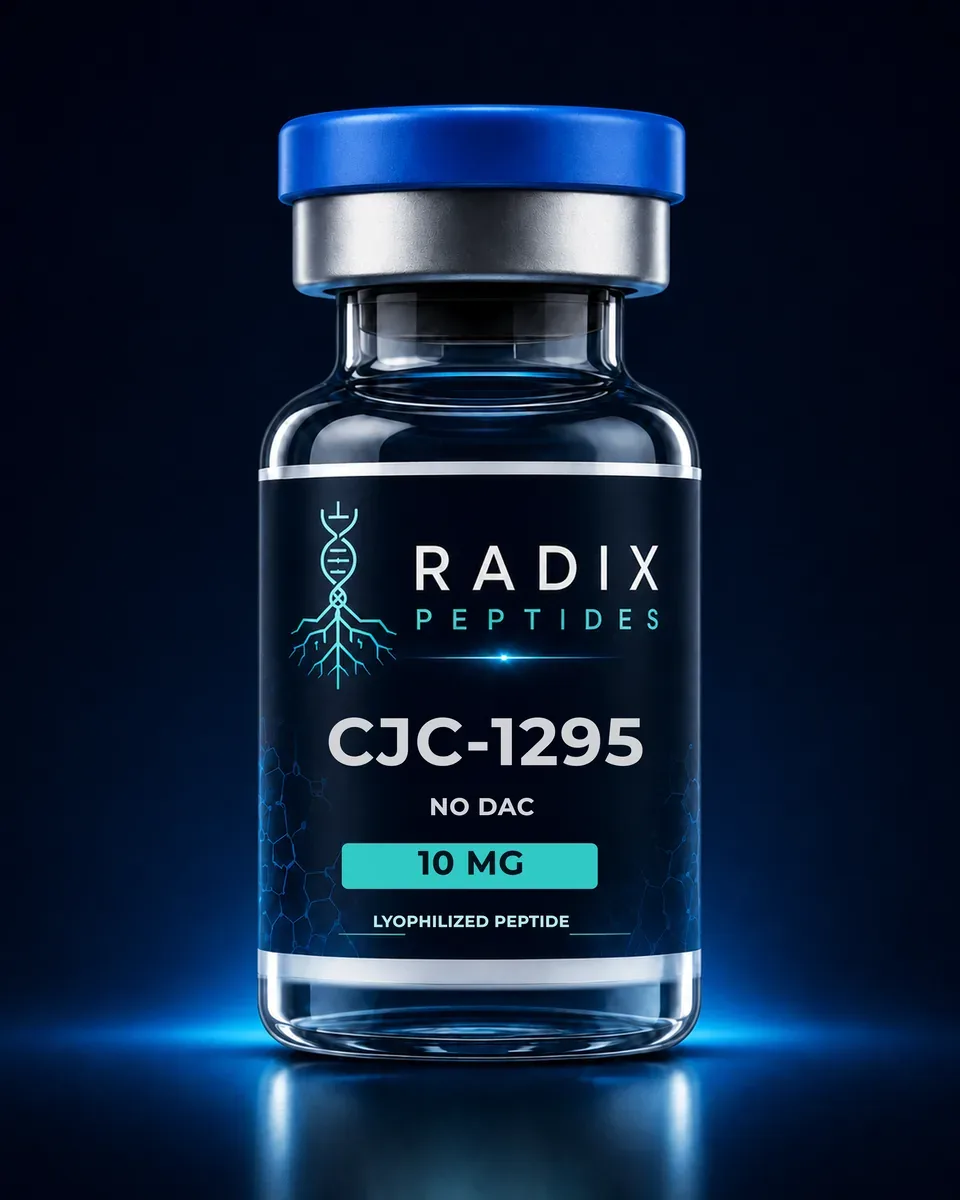
CJC 1295 No DAC
10mg Lyophilized Peptide
GHRH analog studied for GH pulse modulation.
- Third-Party Tested
- Research Grade
- COA
- Fast & Discreet Shipping
Overview
Modified GRF (1-29) is a peptide analogue of growth-hormone-releasing hormone (GHRH). Modified GRF was first developed in the 1980s when it was discovered that the first 29 amino acids of GHRH retained all of the properties of the full 44-amino-acid protein. The original protein, called GRF (1-29), is the smallest fragment of GHRH that retains all of the properties of GHRH. Another truncated synthetic form of GHRH called Sermorelin or GRF 1-29 has 29 amino acids; Modified GRF (1-29) is further modifeid in that it has four substituted aminos in its chain that serve the purposes of preventing degradation and oxidation in manufacture and transport as well as in vivo, while also increasing binding affinity to the GHRH receptors.
Though GRF had full effect, the duration of action was limited due to a very short half-life (less than 10 minutes). As a result, researchers modified GRF (1-29) to give it a longer half-life and thus greater therapeutic potential. Modified GRF (1-29) is occasionally referred to as mod GRF or tetrasubstituted GRF (1-29). The latter name makes it clear that mod GRF differs from GRF (1-29) as a result of four amino acids being changed. Modified GRF (1-29) is identical to CJC-1295 without DAC.
Modified GRF (1-29) Research
Modified GRF has the same effects as GHRH. These effects include muscle growth (hypertrophy), accelerated wound healing, improved bone growth, enhanced fat burning, and accelerated metabolism. Modified GRF also has positive effects on the immune system and blood sugar regulation.
Mod GRF and the Intestine
Early research suggested that GH had positive effects on Crohn’s disease, short bowel syndrome, and other inflammatory bowel conditions. Unfortunately, the benefits of GH in this setting are far outweighed by the side effects of long-term exogenous administration. This prompted researchers to look at whether GHRH analogues might have similar effects without the same serious side effects. Research in monkeys indicates that mod GRF interacts with vasoactive intestinal peptide (VIP) receptors and actually improves bowel motility. The peptide appears to interact with VIPC1, which is found on the smooth muscle of the gastrointestinal, reproductive, and urinary systems[1], [2]. Improved bowel motility is of substantial importance in inflammatory bowel diseases associated with constipation. These conditions lead to a great deal of morbidity and are currently difficult to treat due to lack of drug options.
Mod GRF and Heart Function
Research in rodent models suggests that modified GRF and other GHRH derivatives may improve ethe ability of the heart to pump blood following heart attack[3]. This could be of profound use in improving quality of life and reducing death over the long-term in individuals diagnosed with heart failure. The range of disease this finding could be applied to include pulmonary hypertension, heart failure, heart attack, and any number of congenital heart conditions.
The Interaction Between Thyroid Hormone and Growth Hormone
Problems with the thyroid gland are often associated with concomitant problems in GH release. To probe this interaction, scientists stimulated individuals suffering from hypothyroidism with modified GRF. They found that individuals given thyroid replacement hormone had stronger reactions to GRF, proving a link between thyroid hormone and GH [4]. This is just one of a number of ways that peptides like modified GRF can help scientists to better understand human physiology.
Modified GRF exhibits moderate side effects, low oral and excellent subcutaneous bioavailability in mice. Per kg dosage in mice does not scale to humans. Only buy Modified GRF if you are a licensed researcher.
Research use only. This product is intended strictly for laboratory research and is not for human or veterinary use, diagnosis, or treatment.
Featured In
Certificate of Analysis
View the COA (PDF)Third-party identity & purity for CJC 1295 No DACSpecifications
- CAS Number
- 863288-34-0
- Molecular Formula
- C152H252N44O42
- Molecular Weight
- 3367.954 g/mol
- Sequence
- Tyr-D-Ala-Asp-Ala-Ile-Phe-Thr-Gln-Ser-Tyr-Arg-Lys-Val-Leu-Ala-Gln-Leu-Ser-Ala-Arg-Lys-Leu-Leu-Gln-Asp-Ile-Leu-Ser-Arg
- PubChem CID
- 56841945
- Purity
- ≥ 99%
- Size
- 10mg
- Form
- Lyophilized powder
Analytical Documentation
Independent analytical data verifying the identity and purity of this research compound.
Placeholder document — the third-party certificate of analysis for this product is being prepared and will replace it shortly. For the COA matching your batch, contact us with the lot number on your vial.
Storage & Handling
Store lyophilized powder at -20°C, protected from light and moisture. After reconstitution, refrigerate at 2–8°C and use within 30 days. Avoid repeated freeze–thaw cycles.
You May Also Like